YOTSUBA JAPAN / OSAKAFROM THE YOTSUBA EDITORIAL DESKThe journal
Yotsuba Japan Times

THE JOURNAL / 22 STORIES

Choose a story.
Take a closer look.

Ingredients, research and perspectives from Japan. Open the stories that interest you, and close them when you are ready to explore more.

11INGREDIENT DESK / FERMENTED EXTRACTSOURCE EDITION · 7 OCTOBER 2026Fermentation, in finer detail.What a culture creates: the science behind the fermented extract powder in 16 Lacto Perfection.Read articleClose article

Based on The Health Industry News, issue 1845, 7 October 2026, with KOEI SCIENCE documentation and published ingredient research.

INGREDIENT DESK / FERMENTED EXTRACTSOURCE EDITION · 7 OCTOBER 2026 · 3 MIN READ

Fermentation, in finer detail.

What a culture creates: the science behind the fermented extract powder in 16 Lacto Perfection.
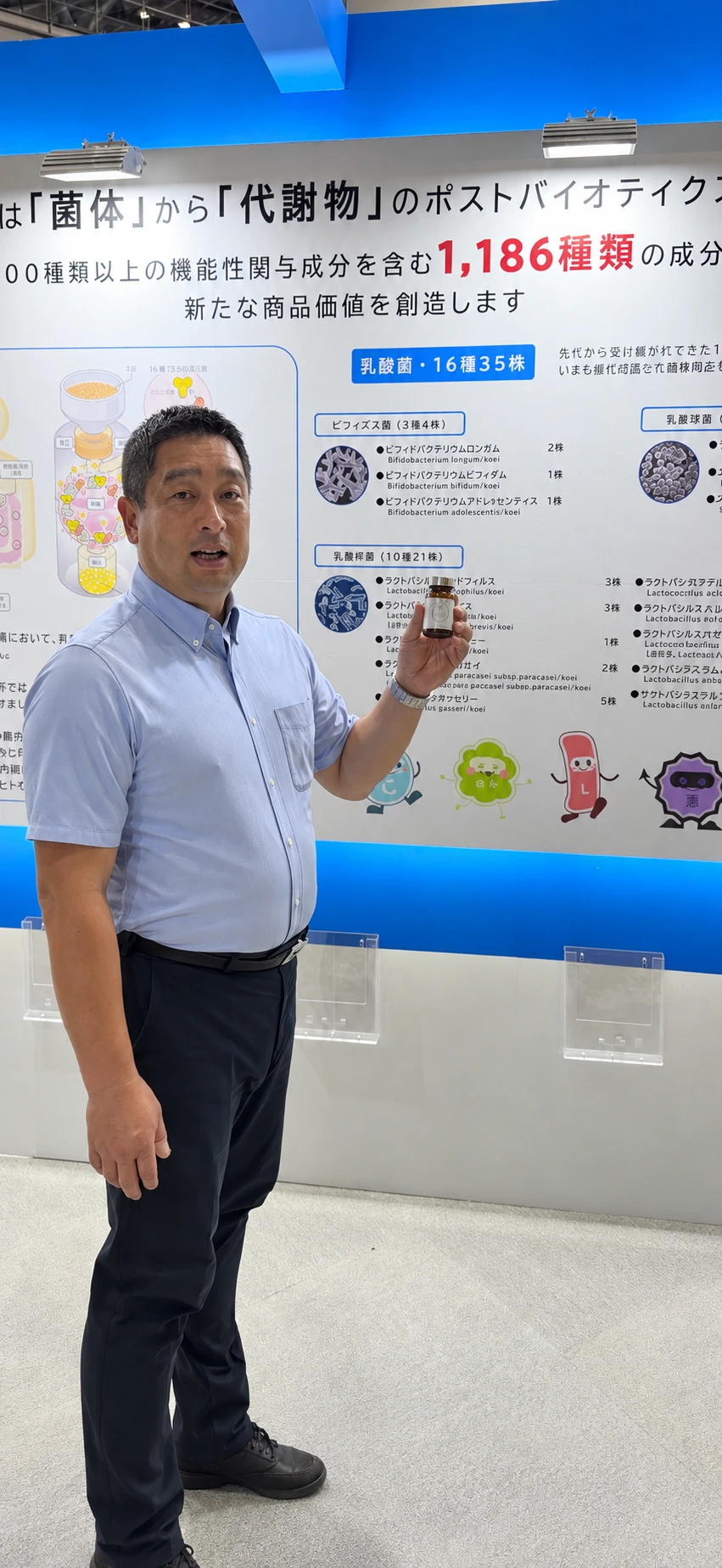
Exhibition photograph of a man holding a 16 Lacto Perfection jar in front of the fermentation research display
From the exhibition stand · Field photograph, retouched with AI for exposure and detail. The display’s 1,186 is the combined analytical count across three preparations; the powder result is 1,117.

Fermentation is often described through its microorganisms: which bacteria are used, and how many. There is a further chapter, however — the substances present as a culture transforms its medium. This is the starting point for the fermented ingredient inside 16 Lacto Perfection.

Japanese developer KOEI SCIENCE uses Sixteens®, a co-culture of 16 species and 35 strains of lactic acid bacteria and bifidobacteria. The approach brings selected microorganisms into a shared cultivation process, with soymilk providing the fermentation medium.

For our formula, the resulting fermented soymilk extract is used in powder form. The preparation is part of its identity: from the culture and its medium to the material that ultimately enters the capsule.

THE INGREDIENT PATHWAY

From a shared culture to a powder

  1. 16 / 35

    Selected culture

    Sixteens® combines 16 species and 35 strains.

  2. Fermentation medium

    Soymilk supports the co-cultivation process.

  3. Prepared ingredient

    Fermented soymilk extract powder is the form used in 16 Lacto Perfection.

A process overview, rather than an illustration of clinical effects. KOEI SCIENCE · Ingredient platform
2026 / ANALYTICAL PROFILE

Three preparations, three chemical profiles

Detected component counts reported by KOEI SCIENCE. Each bar starts at zero.

01,200 detected components
  1. Fermented soymilk · starting material1,075
  2. Fermented extract · powder1,117
  3. Fermented extract · liquid900
The combined count is 1,186 across the three preparations, accounting for their differences. These are detection counts, not concentrations or measures of efficacy. 2026 metabolomics update
HUMAN INGREDIENT RESEARCH / 2022

The people behind the observations

  1. 20

    Adults aged 41–61

    Participants reported three to five bowel movements per week at entry.

  2. 150 mg

    Fermented ingredient each day

    A randomised, double-blind, crossover-controlled design.

  3. Saori Seki, Yoko Onodera and colleagues

    Nihon Pharmaceutical University · Specialist research and clinical teams.

Bowel-function improvements were reported against baseline; selected microbiota differences were reported against placebo. The comparisons should be read separately. Journal of Intestinal Microbiology · DOI 10.11209/jim.36.199

From a culture to a prepared ingredient

Co-culturing means growing microorganisms together. It is different from simply combining separately prepared ingredients: the fermentation process itself is shared. KOEI SCIENCE describes this as a central feature of the Sixteens® platform.

The next question is chemical. What does the resulting fermented material contain? Metabolomics helps researchers examine many compounds together and build a more detailed profile of a sample.

A closer view of the powder

In its 2026 update, KOEI SCIENCE reports 1,117 detected components in the powder. The combined count across three analysed preparations is 1,186. That larger figure includes differences between the preparations; it is not the powder count alone.

These measurements describe chemical composition. They do not rank the preparations by clinical benefit or show that every detected component is present at a biologically effective amount. Composition analysis and human studies answer different questions.

What researchers studied in people

A 2022 paper in the Journal of Intestinal Microbiology by Saori Seki, Yoko Onodera and colleagues examined the fermented ingredient in 20 adults aged 41–61 whose bowel-movement frequency was three to five times per week. The author group brought together Nihon Pharmaceutical University and specialist research and clinical teams.

The randomised, double-blind, crossover-controlled study used 150 mg of the ingredient daily. The authors reported improvements in several bowel-function scores compared with the participants’ starting values, alongside differences in selected microbiota groups compared with placebo. The small study provides human observations to accompany the ingredient’s analytical profile.

From ingredient profile to a daily formula

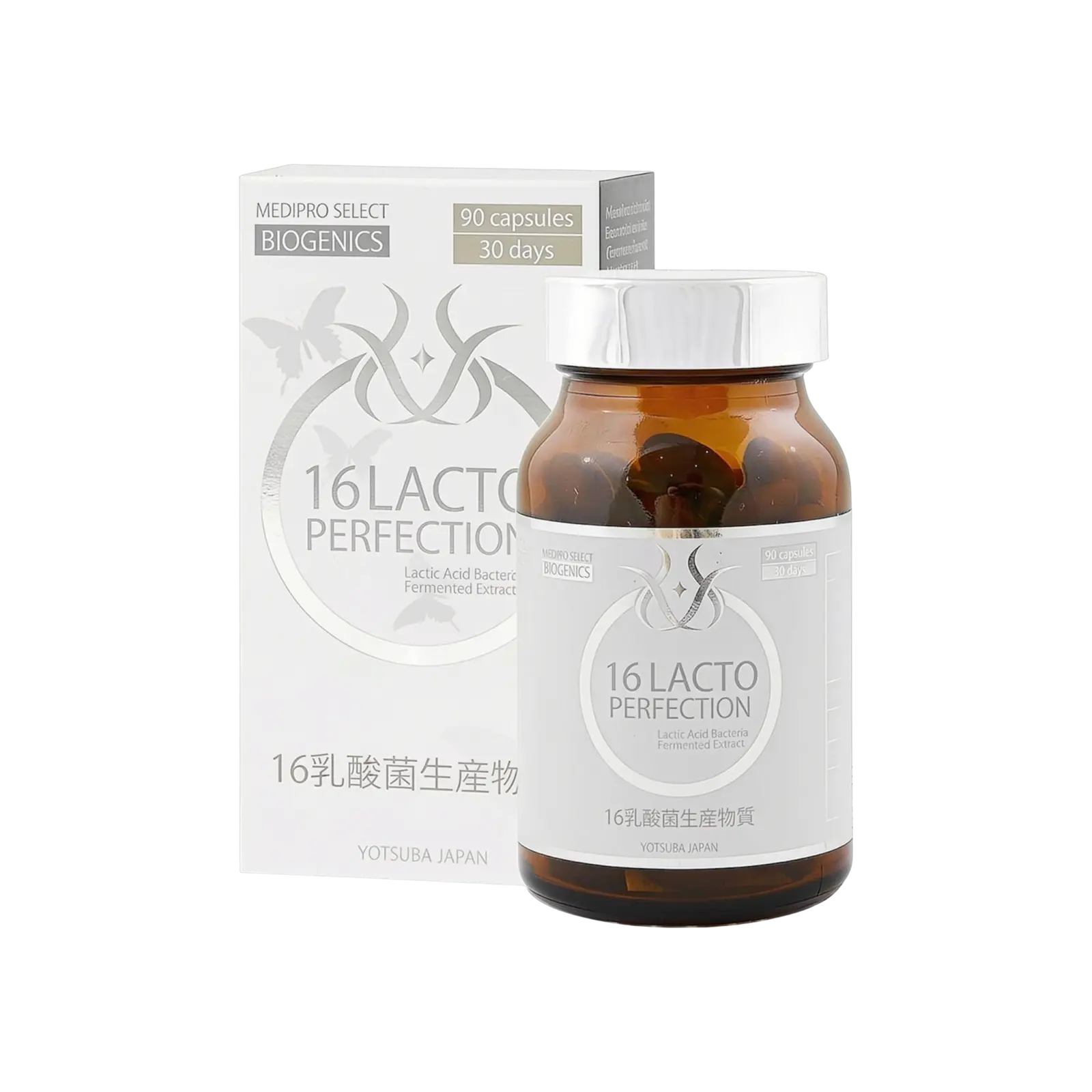
16 Lacto Perfection contains fermented soymilk extract powder made with the Sixteens® culture. The technical composition specifies 150.6 mg per three capsules; the consumer panel rounds this to 150 mg.

Its story connects microorganism selection, co-cultivation, a prepared powder and methods for studying that material. Behind the word fermentation is a specific process — one that can be followed through the complete composition below.

THE YOTSUBA COLLECTION

Explore the complete composition and serving information for the formula containing fermented soymilk extract powder.
ORIGINAL SOURCESSixteens® · Ingredient contextCo-cultivation · KOEI SCIENCE2026 metabolomics · Results by preparationSeki and colleagues · Human ingredient study, 2022

The analytical figures describe raw-material composition. The 2022 publication examines the specified fermented ingredient at 150 mg/day; its bowel-function and microbiota findings use different comparisons. The exhibition photograph documents the setting.
END OF ARTICLE
12INGREDIENT CRAFT / GINSENGSOURCE EDITION · 7 OCTOBER 2026From root to extract.The plant is the beginning. Processing and composition give an ingredient its identity.Read articleClose article

Based on The Health Industry News · No. 1845 · 7 October 2026

INGREDIENT CRAFT / GINSENGSOURCE EDITION · 7 OCTOBER 2026 · 2 MIN READ

From root to extract.

The plant is the beginning. Processing and composition give an ingredient its identity.

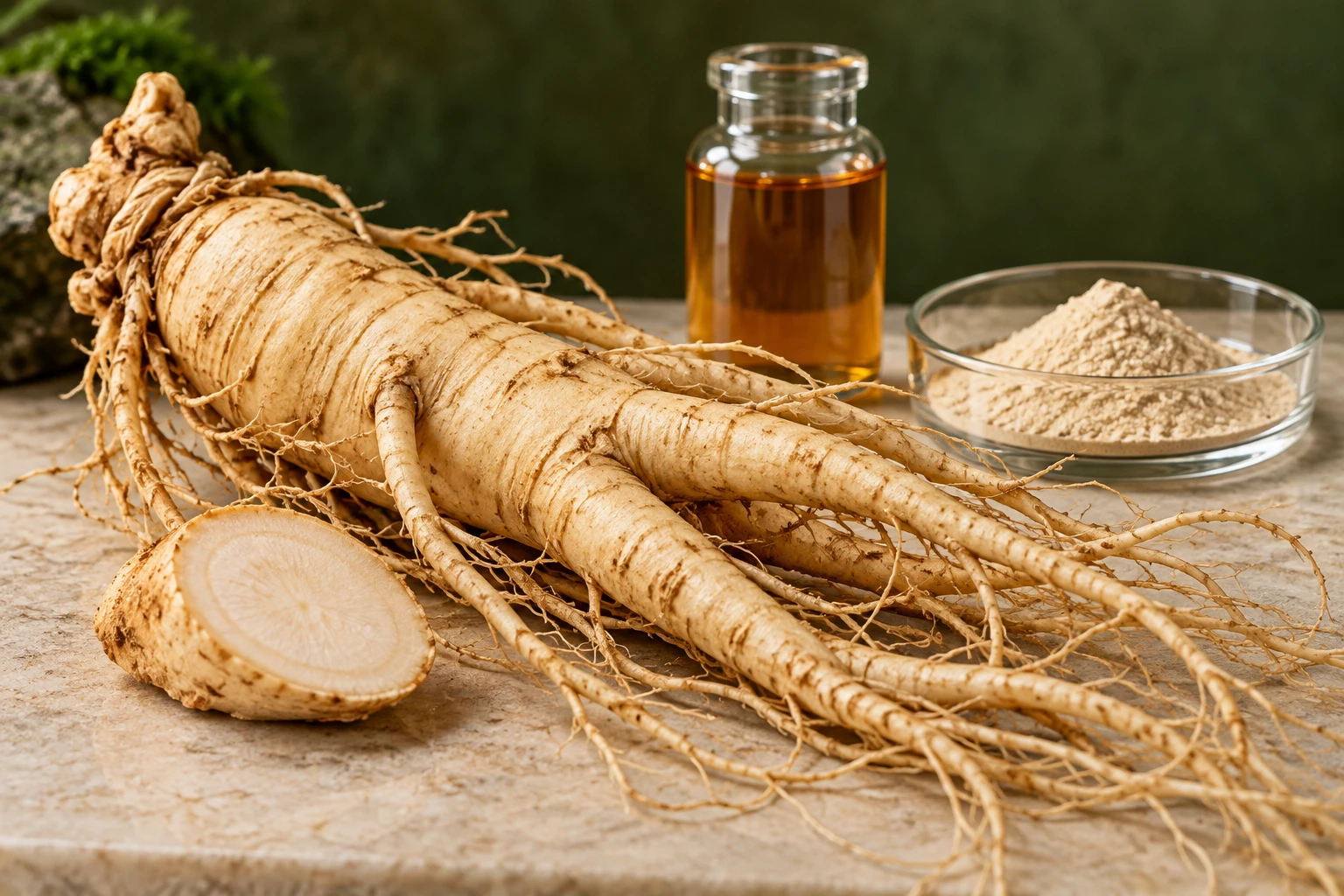
Illustrative scientific still life of a branching ginseng root, a root section and amber extract in laboratory glassware
Ginseng · AI-generated editorial still life, not a photograph of a specified extract.

A familiar plant name can conceal very different ingredients. Ginseng offers a particularly rich example: roots and berries, distinct botanical species, different extraction methods and multiple forms of processing all appear in contemporary product development.

The professional market presents Asian ginseng, American ginseng and Panax notoginseng alongside red, black and fermented preparations. These names describe differences that deserve attention. An attractive root photograph alone cannot tell us what is inside an extract.

Fermentation is one way to change the chemical profile. Experimental work by researchers at Dongshin University on ginsenoside biotransformation shows that the microorganisms and processing conditions matter. This is a reason to examine the resulting composition closely. It does not establish that every fermented preparation is equivalent or more effective.

Standardisation adds another layer of detail. A specification may state a total ginsenoside content or quantify an individual component such as Rb1. The next question is how much of that specified extract is present in the daily serving. A concentration in the raw material and an amount in the finished product describe different things.

The same care applies to research. Results from a particular species, extract or processing method belong to that preparation. Before applying them to another formula, the botanical identity, composition and studied amount need to be compared.

For Yotsuba, this is a useful way to tell an ingredient story. Origin gives it a setting; processing explains how it was made; analysis describes what it contains. Together, those details make the journey from plant to daily product more understandable.

GINSENG / FROM PROCESS TO PROFILE

Follow the composition through the process

  1. Identify the source

    Document the botanical species and the selected plant material.

  2. Describe the processing

    Record extraction or fermentation conditions; the process shapes the resulting preparation.

  3. Measure the profile

    Analytical work quantifies selected ginsenosides in the resulting material.

A conceptual quality-and-research pathway. The linked experimental paper concerns microbial ginsenoside biotransformation; the diagram does not assign a conversion yield or absorption advantage to a Yotsuba formula. Experimental ginsenoside research
THE YOTSUBA COLLECTION

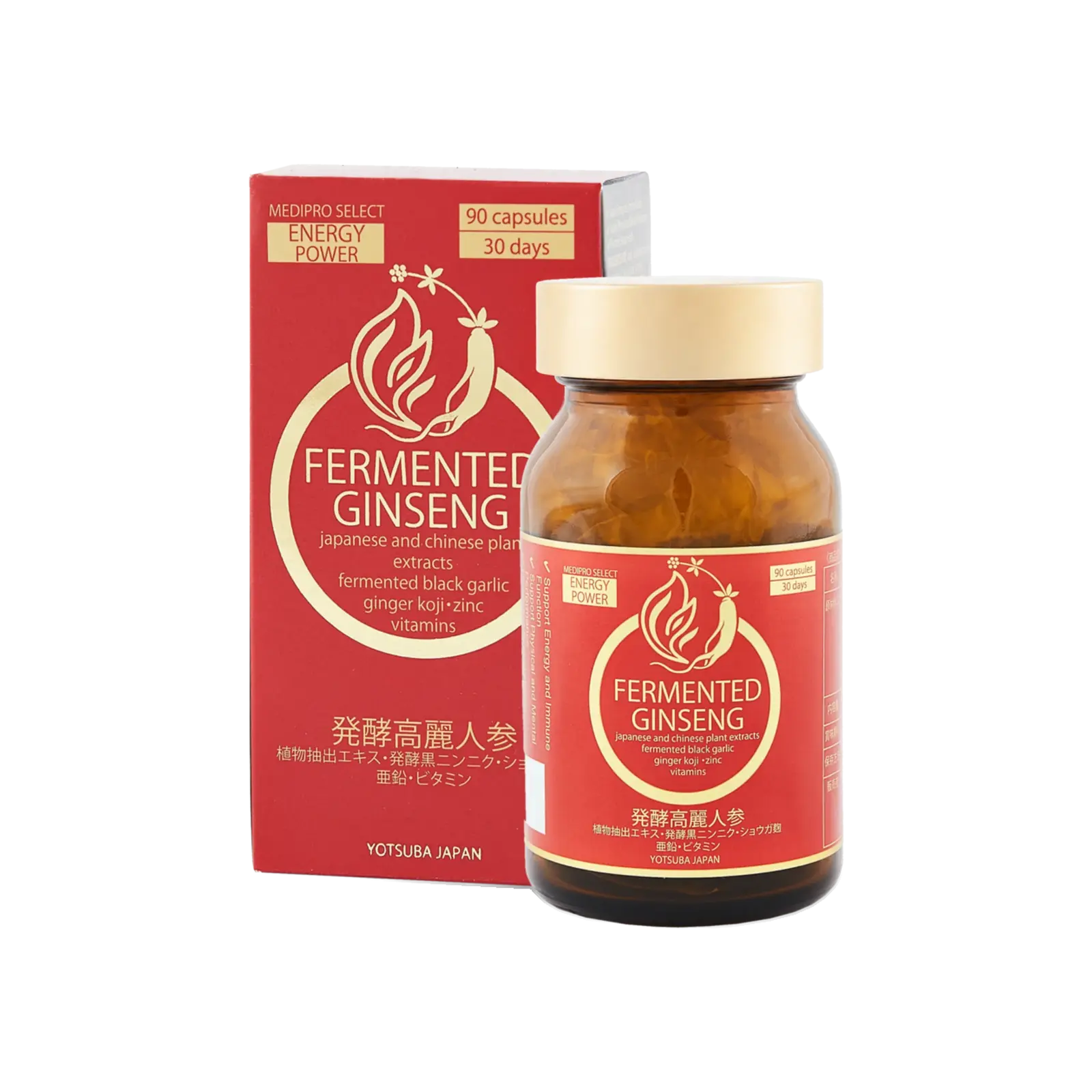
Our fermented ginseng collection provides a practical starting point for exploring processing and ingredient composition.

The cited processing research provides ingredient context. It does not evaluate the complete Yotsuba formula or establish a universal advantage of fermentation.

END OF ARTICLE
13JAPAN / BOTANICAL CULTURESOURCE EDITION · 7 OCTOBER 2026Tradition, carefully reformulated.From Nara’s botanical heritage to ginger drinks and jellies: familiar plants meet contemporary product design.Read articleClose article

Based on The Health Industry News · No. 1845 · 7 October 2026

JAPAN / BOTANICAL CULTURESOURCE EDITION · 7 OCTOBER 2026 · 2 MIN READ

Tradition, carefully reformulated.

From Nara’s botanical heritage to ginger drinks and jellies: familiar plants meet contemporary product design.

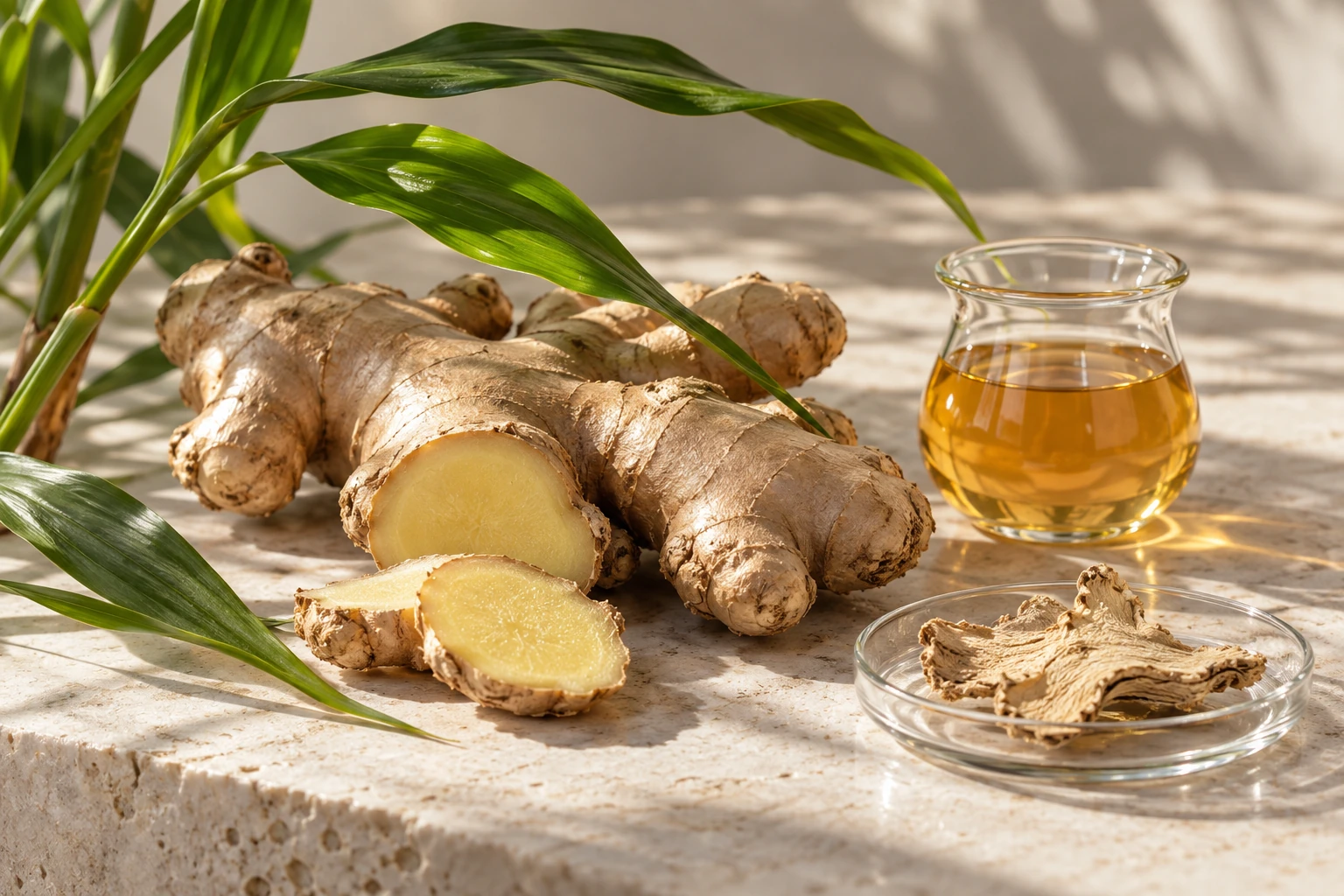
Illustrative botanical still life of fresh ginger, slender leaves and an amber infusion
Botanical craft · AI-generated editorial still life illustrating ginger and formulation.

Japan’s botanical stories often begin in a place. Nara offers one such setting, where a long history of medicinal plants meets today’s work in extracts, health foods and drink formulation. The interest lies in how that heritage is being carried into new forms.

Regional development includes Yamato toki, a locally associated form of Japanese angelica, and other cultivated botanicals. Manufacturers are exploring drinks and food formats alongside extraction and quality control. The historical use of a plant provides context; the properties of a contemporary preparation remain a separate question.

Ginger tells a parallel story through everyday familiarity. Development proposals now extend beyond conventional powders and tablets to small drinks, jellies, soups and other foods. Taste, aroma and the ease of incorporating an ingredient into a routine are prominent parts of that work.

Processing creates choices. A formulator may need a powder that disperses in a drink, an extract with a controlled sensory profile or a format suited to a small serving. Those choices influence how a botanical is used and experienced. They need to be considered together with its composition.

This is also why a familiar name should be read carefully. Ordinary ginger and the botanically different ingredient marketed as black ginger should not be treated as interchangeable. Product identity begins with the plant itself, before the discussion of a possible application.

For a modern Japanese collection, botanical heritage can offer both character and a reason to look more closely. The strongest story follows a plant from its cultural setting through documented processing to a clearly described product. It gives tradition a visible place in contemporary formulation.

RESEARCH CONTEXT

An editorial perspective on botanical product development. Historical use and commercial applications do not establish clinical effects.

END OF ARTICLE
14BOTANICAL STORIES / LUTEININGREDIENT STORY · 23 SEPTEMBER 2026Lutein. From golden petals to vision science.Marigold flowers, deep-purple berries and the research that connects nutrition with the way we see.Read articleClose article

Based on The Health Industry News, issue 1844, 16 September 2026, ingredient documentation and scientific publications.

BOTANICAL STORIES / LUTEININGREDIENT STORY · 23 SEPTEMBER 2026 · 3 MIN READ

Lutein. From golden petals to vision science.

Marigold flowers, deep-purple berries and the research that connects nutrition with the way we see.

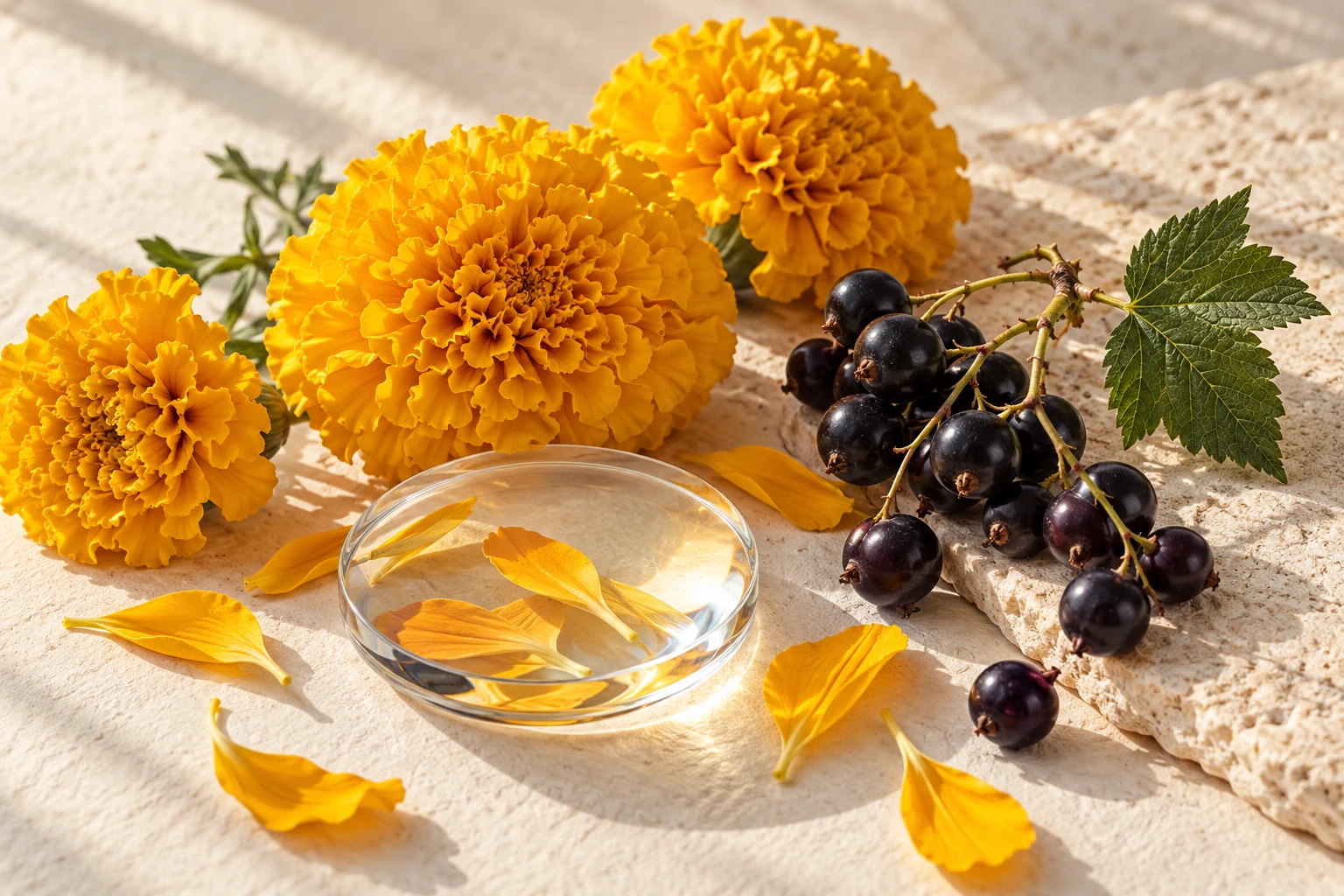
Golden marigold flowers, blackcurrants and loose petals beside a clear optical lens on a warm ivory surface
Golden petals and dark berries · AI-generated editorial still life, illustrating botanical origins rather than a tested ingredient sample.

Morning messages on a phone. Documents, photographs and a computer screen throughout the day. In the evening, a book — or the journey home through the light of passing headlights.

Our gaze moves constantly between objects, distances and changing light. The quality of vision is made up of many details: how well we distinguish shades and contrasts, how we respond to bright light, and how comfortable our eyes feel after a long day.

These everyday questions help explain scientific interest in lutein — a yellow plant pigment also found in our eyes.

Why lutein?

Lutein and the closely related pigment zeaxanthin accumulate in the central region of the retina. This small area helps us read, recognise faces and see fine details.

The pigments absorb part of the short-wavelength visible light spectrum and take part in protection against oxidative processes. The human body does not make them: we obtain them from food, including green vegetables and egg yolks.

Lutein used in food supplements has another distinctive source — the golden flowers of marigolds.

The story begins with a flower

Marigold flowers are the source of the lutein ingredient described in the documentation for our Marigold Lutein formula.

The petals pass through several processing stages to produce an ingredient with a defined lutein content. In the supplied materials, it is called Lyc-O-Lutein™.

Behind a short line on an ingredient list lies a whole story: selecting a plant, extracting its pigment, preparing the material and checking the result. The vivid colour of a flower becomes part of a contemporary formula.

What researchers are asking today

Scientists examine different aspects of vision, from age-related changes in the retina to visual comfort in everyday life.

In an Australian study published in 2025, Adrian Lopresti and S. J. Smith followed 70 adults who spent more than six hours a day using screens. For six months, participants received lutein and zeaxanthin or a placebo.

They measured how quickly vision recovered after bright light and how stable the tear film remained on the eye’s surface.

Some objective measures improved more in the carotenoid group. Participants’ own ratings and contrast sensitivity did not differ between groups. The study used a different ingredient preparation, so the findings help explain this research direction while remaining specific to the composition tested.

A CLOSER LOOK / THE 2025 STUDY

Everyday screen use. Measured over time.

  1. 70 adults

    A day with screens

    Participants used screens for more than six hours daily.

  2. 6 months

    Two study groups

    A randomised, double-blind comparison with placebo.

Study design, not a graph of benefit. Results concern the tested preparation. Lopresti & Smith · Original paper, 2025

Golden flowers and purple berries

In Marigold Lutein, the story continues with berries.

Blackcurrant, maqui and blue honeysuckle contain plant polyphenols. These include anthocyanins, which give fruit rich red, blue and purple shades.

The supplied documentation describes Meiji AC10 blackcurrant extract as a source of a particular group of anthocyanins. The blue-honeysuckle materials introduce another berry ingredient in the composition.

Lutein and berry polyphenols belong to different families of plant compounds. Bringing them together gives Marigold Lutein a broader composition than its name alone might suggest.

TWO BOTANICAL COLOURS

Golden petals. Deep-purple berries.

  1. Marigold flowers

    The botanical source of the lutein ingredient.

  2. Berry pigments

    Anthocyanins form part of the polyphenol story.

An illustrated guide to botanical pigments. Colours refer to the plants.

A formula with several stories

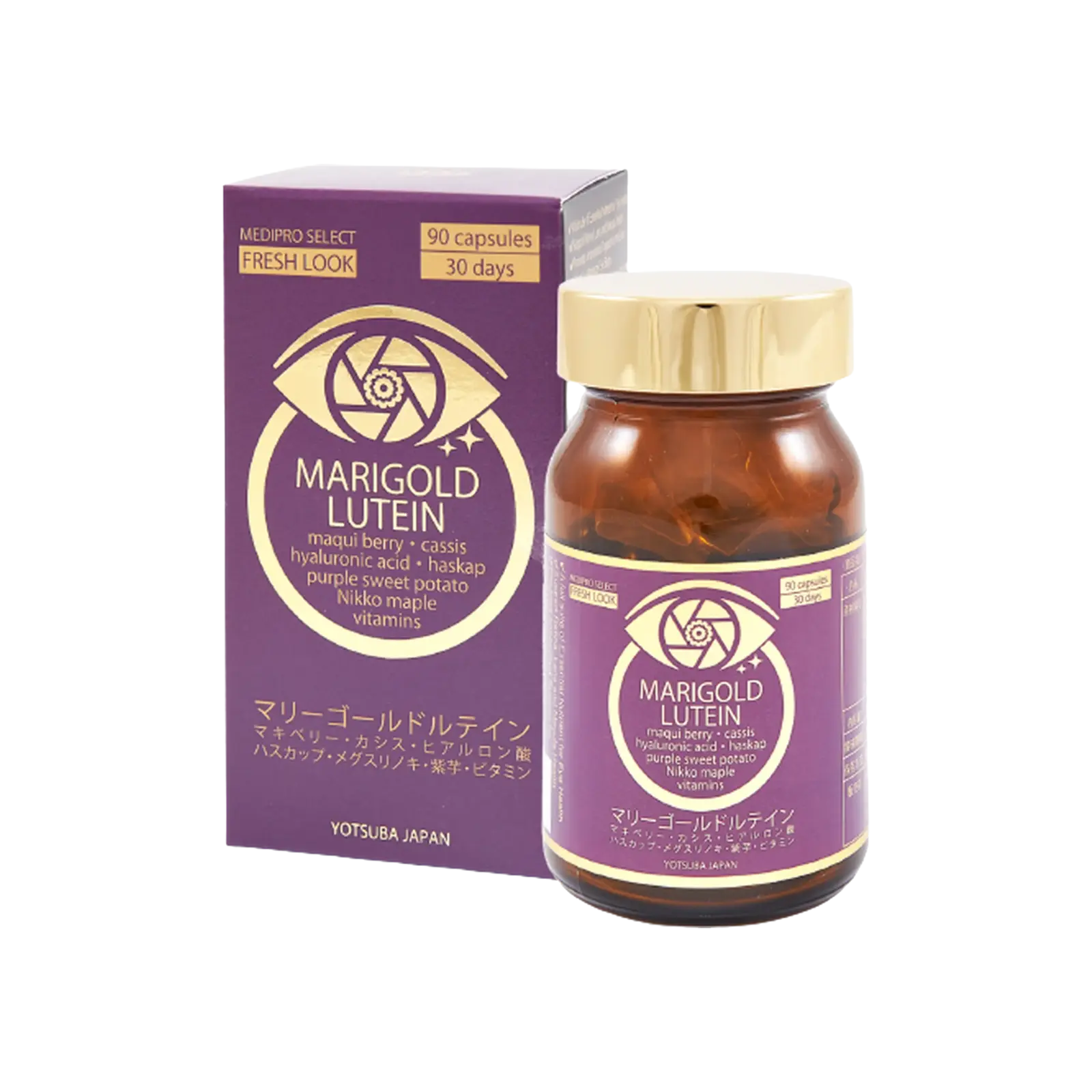
Yotsuba Japan Marigold Lutein combines marigold-derived lutein with berry extracts, purple chrysanthemum, purple sweet potato and other ingredients. Hyaluronic acid and vitamins A, E, B6 and B12 complete the composition.

Golden petals and dark berries give the formula its character. Scientific research helps us ask precise questions about its ingredients — and gradually understand more about the relationship between nutrition and vision.

THE YOTSUBA COLLECTION

Explore the complete botanical composition of Yotsuba Japan Marigold Lutein.

The human study discussed used a different ingredient preparation. It did not test the complete Yotsuba formula.

END OF ARTICLE
15RESEARCH / BOTANICALSSOURCE EDITION · 16 SEPTEMBER 2026From sprout to strand: studying botanicals for beauty.A familiar plant, a less familiar extract. Following pea sprouts from human observations to follicle research and the composition of a daily formula.Read articleClose article

Topic source: The Health Industry News, 16 September 2026, hair and scalp care section. Scientific references: Phytotherapy Research (2020) and Journal of Microbiology and Biotechnology (2025). Formula composition: ANA GAIN™ Nu, Yotsuba Japan.

RESEARCH / BOTANICALSSOURCE EDITION · 16 SEPTEMBER 2026 · 3 MIN READ

From sprout to strand: studying botanicals for beauty.

A familiar plant, a less familiar extract. Following pea sprouts from human observations to follicle research and the composition of a daily formula.

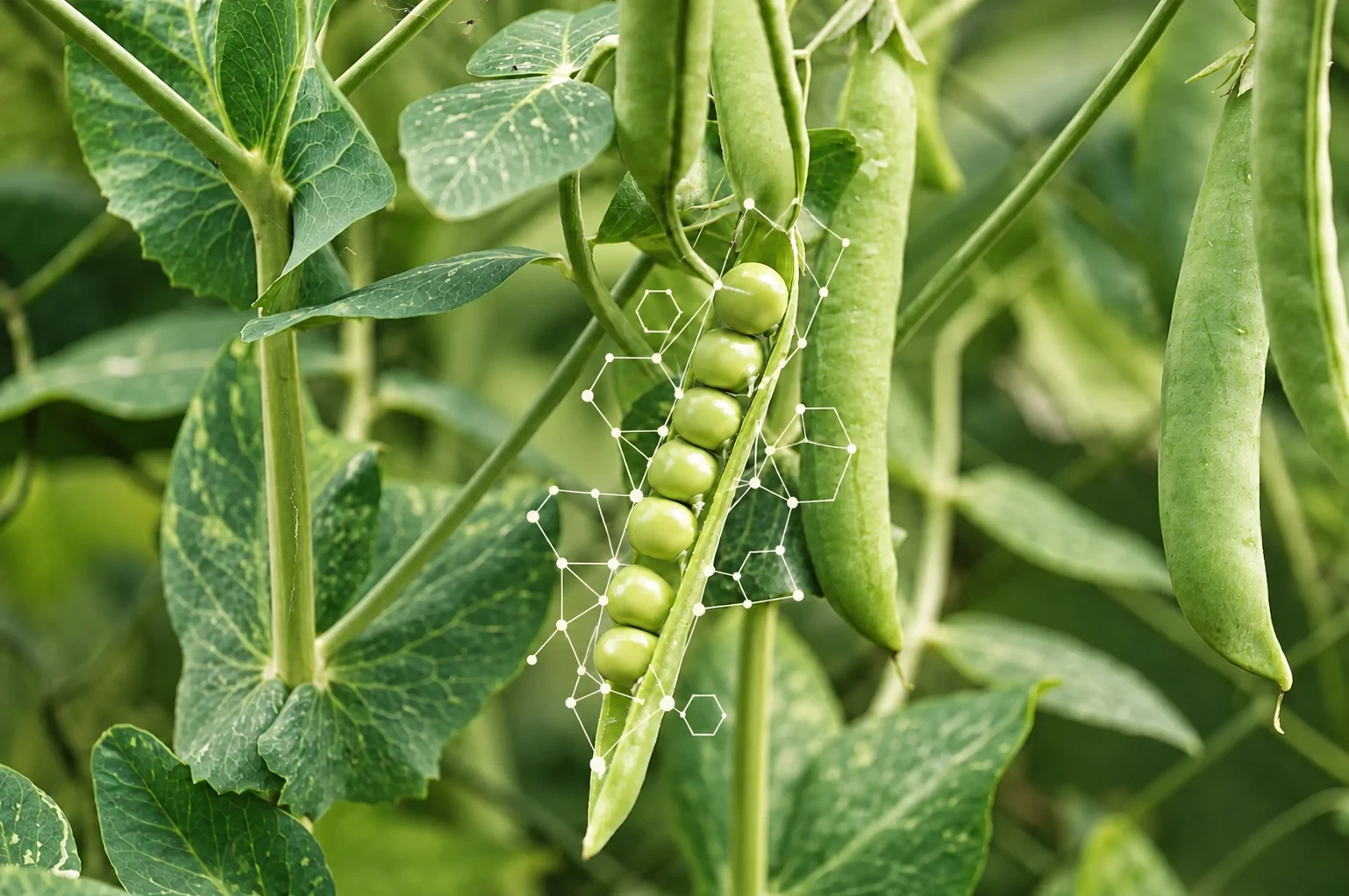
An open green pea pod with a fine white molecular-style graphic
The pea plant, interpreted through a botanical-science motif. AI-edited editorial illustration; the white network is conceptual. The researched ingredient is an extract of young sprouts.

Hair changes slowly. While we notice length, shine and volume, each follicle follows its own rhythm. A period of active growth gives way to a transitional phase and then rest, before another cycle begins. Neighbouring hairs can be at different stages, so shedding alone does not necessarily mean that renewal has been disrupted.

This rhythm helps explain why researchers are interested both in the structural components of hair and in the processes that regulate its growth. One intriguing subject of that research is pea sprout extract.

A familiar plant in a new role

Peas are familiar as a source of plant protein. AnaGain™ Nu is a different kind of ingredient: an extract of young pea sprouts, studied in relation to the activity of the hair follicle.

A small pilot study involving 21 people evaluated daily intake of 100 mg of the extract over eight weeks. By day 28, the researchers recorded a reduction in the number of shed hairs.

This is a specific but limited finding. It provides a reason to continue studying the ingredient; it does not establish the effectiveness of every formula that contains it.

At the root of the hair

A paper published in 2025 explored possible mechanisms of action. Scientists investigated dermal papilla cells, which form part of a structure at the base of the follicle involved in regulating hair growth, and also conducted experiments in animals.

Their findings linked the extract with signals that support the active growth phase. The authors also examined cellular processes associated with oxidative stress and inflammation.

Such studies help explain which processes might underlie an observed effect. Findings in cells and animals still need further evaluation in people.

Bringing a formula together

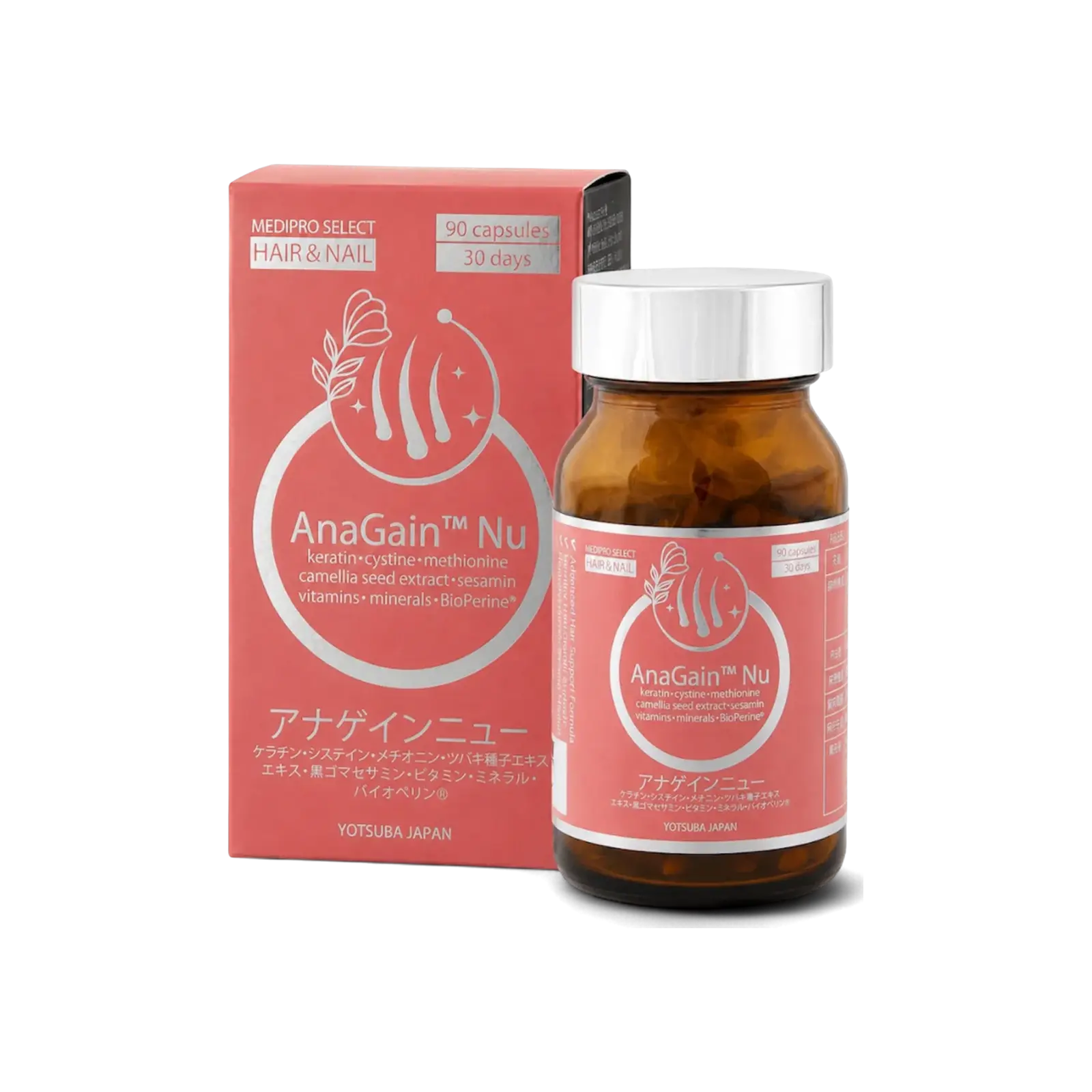
In ANA GAIN™ Nu by Yotsuba Japan, pea sprout extract is combined with hydrolysed keratin, the amino acids L-cystine and L-methionine, vitamins and mineral ingredients. Extracts of camellia seeds, black sesame and gagome kombu seaweed add a Japanese botanical dimension.

This brings together different strands of development: research into a plant extract and the selection of components for a comprehensive formula. Evidence for individual ingredients should still be distinguished from the results of testing the finished product.

Beauty at its own pace

Caring for hair takes time, along with attention to the reasons behind any changes. No single botanical ingredient can account for all the factors that influence its condition.

The story of pea sprout extract nevertheless shows how this field develops: from selecting a plant to observations in people, then to investigating cellular mechanisms. Behind an appealing ingredient name, more meaningful questions begin to emerge: what was studied, what did the researchers find, and how confidently can those findings be applied to everyday life?

THE YOTSUBA COLLECTION

Discover the complete Hair & Nail formula and its ingredient research.

END OF ARTICLE